

The lasting power of a fictional universe is measured not simply by how often audiences return to its original stories, but by whether that world can continue developing without losing the qualities that made it meaningful. Harry Potter and the Cursed Child approaches that challenge by moving the story forward rather than attempting to reproduce Harry Potter’s school years onstage. Its Broadway production explores adulthood, parenthood, friendship, inherited expectations and the complicated relationship between past and future.
At the same time, it gives audiences the fantasy spectacle they expect from the wizarding world through ambitious stage illusion and an immersive theatre environment. The result is a production that uses familiarity as a foundation rather than a limitation, giving Broadway audiences a chance to reconnect with established characters while discovering how the next generation responds to their legacy.
Harry Potter Is Older, but His Past Has Not Disappeared
Growing older does not erase formative experiences. That principle gives the play one of its most interesting emotional foundations. Harry Potter may no longer be the child entering Hogwarts for the first time, yet the extraordinary events of his youth continue to influence his identity and his family.
Parenthood introduces a challenge that heroic adventures cannot prepare someone to solve neatly. Children form their own personalities, make unexpected choices and sometimes reject the expectations placed upon them. Albus Potter therefore cannot simply become a smaller version of his father. His story is shaped partly by Harry’s reputation but also by his desire to understand who he is independently of it.
This gives the production an emotional tension that feels more mature than simple nostalgia. The past remains important, but the characters cannot live entirely inside it. That becomes even more complicated when the narrative begins exploring what could happen if the past itself were altered.
What Makes the Broadway Production Stand Out
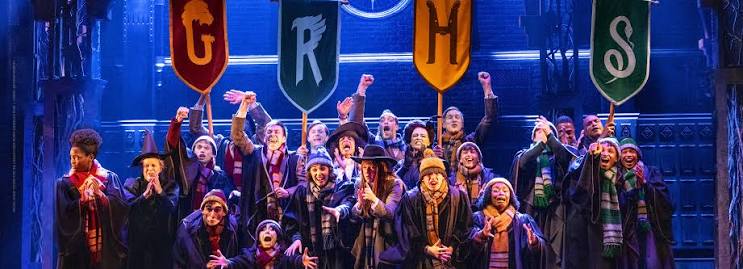
Several characteristics help the production create an identity distinct from other forms of Harry Potter entertainment.
- The story moves beyond the original school-era adventures into a new generation.
- Parent-child relationships sit alongside fantasy and magical conflict.
- Live theatrical illusions replace the cinematic visual language audiences already know.
- The transformed Lyric Theatre extends the atmosphere beyond the stage.
- Interactive experiences, themed refreshments and merchandise surround the performance.
- New visitors can access official story and character resources before attending.
This combination allows the production to function simultaneously as narrative continuation, Broadway spectacle and immersive entertainment.
Live Theatre Makes Familiar Magic Feel Unfamiliar Again
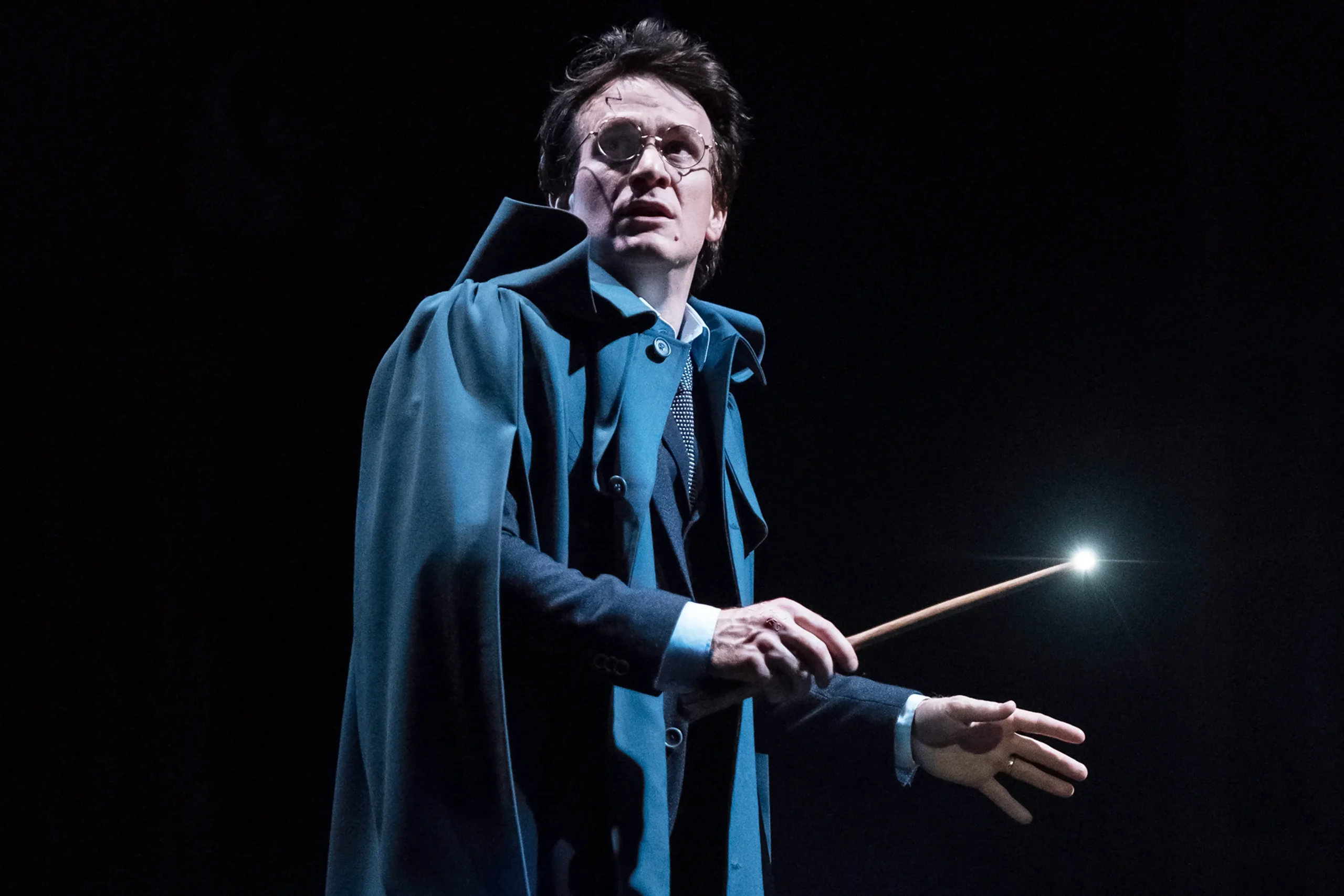
Audiences have seen extraordinary things happen in Harry Potter films. They know that staircases can move, spells can fly and people can disappear. The challenge for Broadway is therefore not simply showing another magical event. It is making viewers wonder how something happened when they were physically present to witness it.
The stage becomes part of the storytelling precisely because of its limitations. There is no film edit separating the audience from the effect. When performers transform, vanish, appear somewhere unexpected or interact with impossible-looking environments, the mechanics remain hidden within live performance.
The official production strongly emphasizes this theatrical magic and the sensation of witnessing spectacular spells directly onstage. The approach helps restore surprise to a universe whose visual language is already internationally recognizable.
Theatre audiences also share their reactions collectively. Gasps, laughter and silence travel through the auditorium in real time, creating an energy that no private screening can fully reproduce. Magic becomes communal rather than individual.

Draco Malfoy Continues to Matter to the Story
Draco Malfoy’s role is especially interesting because the production allows audiences to encounter him as an adult and a father rather than viewing him only through the rivalry of his school years. His relationship to Scorpius creates another generational perspective that parallels Harry and Albus.
The current Broadway production has also created a notable connection between stage and screen history: Tom Felton, who portrayed Draco Malfoy in the Harry Potter films, is currently appearing as Draco in the Broadway production, with the official site announcing his engagement through January 3, 2027.
For longtime fans, that casting creates an unusual sense of continuity. A performer associated with Draco’s youth is now presenting an older version of the character in a live theatrical story about the next generation. Yet the role also demonstrates one of the production’s broader themes: characters do not remain fixed forever in the identities audiences first knew.
Newcomers Are Invited Rather Than Excluded
A continuation story inevitably carries history, but the Broadway production attempts to make that history manageable. The official website provides a journey through the earlier stories, a glossary and descriptions of major characters for people who are new to the wizarding world or simply need a refresher.
That accessibility matters because Broadway audiences are diverse. Some people attend because they have followed Harry Potter for decades. Others may accompany friends or family, while some may be primarily interested in the theatre technology and spectacle.
A Continuing Story That Uses Broadway to Look Forward
The most interesting thing about Harry Potter and the Cursed Child is not simply that it brings familiar characters back. It asks what happens after the famous adventure, when heroes become parents and their children must decide what to do with the world they inherited. That perspective gives the production room to respect Harry Potter history without existing entirely inside nostalgia. Meanwhile, Broadway provides the perfect medium for rediscovering magical surprise. The audience understands that it is watching a stage, performers and physical scenery, yet the production repeatedly challenges those expectations through illusion and design. Combined with the immersive Lyric Theatre setting, the story becomes both continuation and reinvention. For fans who thought they already knew exactly what Harry Potter magic looked like, Harry Potter and the Cursed Child offers perhaps its most appealing promise: the possibility of being surprised again.