

Stranger Things has always lived in the space between nostalgia and unease, blending small town familiarity with creeping supernatural threat. Stranger Things: The First Shadow takes that tension and reshapes it for the stage, offering something that feels neither like a spin-off nor a novelty adaptation. Instead, it functions as a narrative expansion, one that deepens the mythology while standing confidently as a theatrical work in its own right.
Set decades before the events of the series, the production explores Hawkins at a quieter, more fragile moment. Familiar names appear, but in unfamiliar forms, allowing the audience to see how ordinary lives begin to bend toward something darker. This prequel structure is central to the experience. Rather than relying on recognition alone, the story invites viewers to reassess what they think they know about the world of Stranger Things.
A Story That Adds Weight, Not Noise

The strength of The First Shadow lies in restraint. Instead of attempting to recreate the fast-paced spectacle of television, the production leans into atmosphere and character. Scenes unfold with patience, letting tension accumulate through silence, subtle movement, and carefully timed reveals.
The narrative focuses on formative moments. Relationships feel tentative, personalities still in flux. This approach adds emotional depth, particularly for audiences familiar with the series. Knowing what lies ahead gives each interaction added weight, but the writing never assumes prior knowledge. Newcomers can follow the story without feeling excluded, while long-time fans gain context that enriches the broader canon.
Theatre As A Medium, Not A Limitation
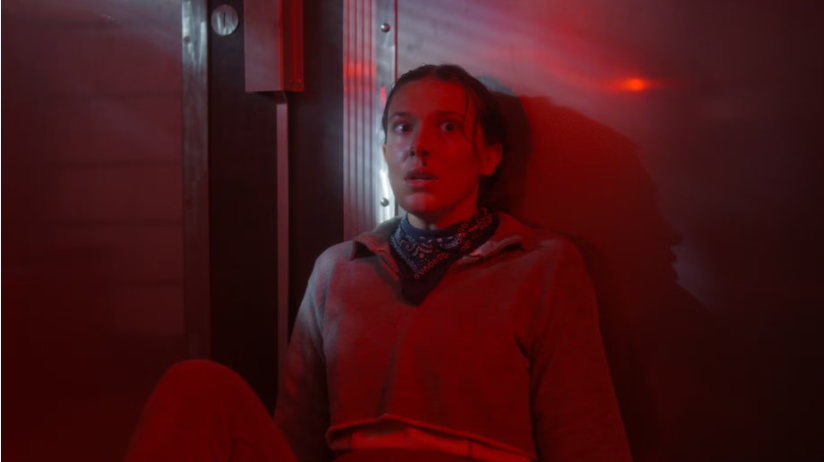
Rather than treating the stage as a constraint, the production uses it as an advantage. The physicality of live performance creates immediacy that television cannot replicate. Set transitions are fluid, often happening in full view, reinforcing the sense that reality in Hawkins is unstable.
Visual effects are integrated thoughtfully. They serve the story rather than dominate it, appearing at moments of emotional or narrative significance. This balance prevents spectacle from overshadowing performance, a common risk when translating screen properties to theatre.
Lighting and sound design do much of the heavy lifting. Shifts in tone are often signaled through subtle changes rather than overt cues, keeping the audience alert and engaged.
Performances That Ground The Supernatural
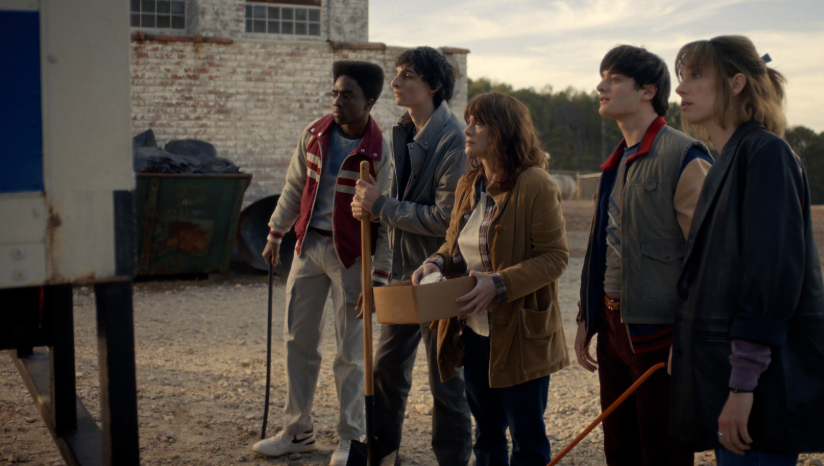
The cast carries the production with confidence. Performances feel grounded, even when the story edges into the uncanny. This grounding is essential. Without it, the supernatural elements would feel decorative rather than unsettling.
Actors portray characters on the brink of becoming who they are destined to be. That sense of incompletion gives the story momentum. Small choices, moments of hesitation, and emotional restraint all hint at future transformations without spelling them out.
The result is a cast that feels cohesive, unified by tone rather than exaggerated characterization.
Design That Builds A World, Not Just A Set
Production design plays a critical role in establishing Hawkins as a living place. Sets are modular and symbolic, suggesting locations rather than reproducing them literally. This abstraction allows scenes to shift quickly while maintaining coherence.
Costume design reinforces the time period without leaning heavily into pastiche. Clothing feels lived-in, supporting the idea that this is a story about ordinary people before extraordinary events take hold.
Together, these elements create a visual language that feels specific to the stage production while remaining recognizably part of the Stranger Things universe.
An Experience For Fans And First-Timers Alike
One of the production’s most impressive achievements is accessibility. While fans will recognize thematic echoes and narrative seeds, the show does not rely on callbacks or references for impact. The story stands on its own, offering a complete arc with emotional resolution.
For fans, the reward lies in context. Seeing how certain dynamics begin, and how seemingly small events ripple outward, adds dimension to the series without rewriting it. For newcomers, the show functions as an entry point, offering a self-contained story that sparks curiosity rather than confusion.
Event Theatre With Purpose
Stranger Things: The First Shadow positions itself as event theatre, but not in a superficial sense. The production feels carefully considered, aiming to contribute meaningfully to both theatrical culture and the Stranger Things narrative.
Its success lies in understanding what theatre does best. Intimacy, immediacy, and shared experience take precedence over scale alone. The audience becomes part of the tension, reacting in real time to moments of surprise and unease.
This shared presence amplifies the emotional impact, reminding viewers why live performance remains powerful even in an era dominated by screens.
A Confident Expansion Of The Universe
Ultimately, The First Shadow does not try to replace or replicate the series. It complements it. By exploring origins rather than outcomes, it adds texture to the Stranger Things universe while respecting the integrity of the original story.
As a piece of theatre, it stands confidently on its own terms. As part of a larger narrative world, it deepens understanding without overexplaining. That balance is difficult to achieve, and it is what makes this production feel purposeful rather than promotional.
For audiences seeking a theatrical experience that combines storytelling, atmosphere, and cultural relevance, Stranger Things: The First Shadow offers something rare. It is a prequel that feels essential, a stage production that embraces its medium, and an example of how popular narratives can evolve without losing their core.